A cyclone was blowing out in the Mozambique channel, off the eastern coast of Madagasgar and we had to make a decision. From the town of Tulear we were to take a boat south to a little beach village called Anakao for a two-night stay. Getting there might be possible, assuming the port authority gave the local fleet the all clear, but if the stormy weather continued, we might get stuck in Anakao. That could make it very difficult to get back to Tana for our onward flight to Bangkok, Thailand.
We opted to return to Tana by road with Dorique and our driver, Joey, doing in two days what we had earlier done in four. Continuing our Malagasy road trip sounded like more fun than waiting two days in blowy, humid Tulear to catch the regional flight originally booked for us.
Would we miss out on our beach experience? Well no, not quite. We made a jaunt south to Sarodrano, crossing the Tropic of Capricorn on the way. We drove past mangrove trees and strange euphorbia with poisonous sap (second photo below).

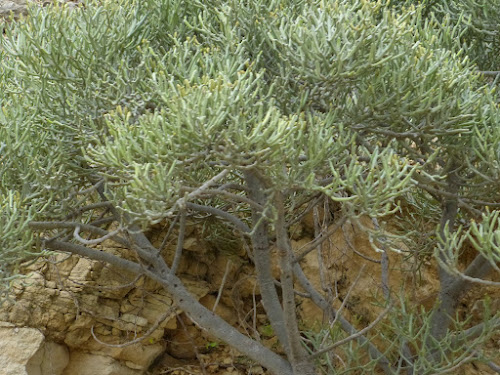
We passed baby baobab trees.

Best of all, we were able to see spiny compass trees. Their fleshy cactus-like branches bend with the prevailing wind, giving a directional clue to passing travelers.


Dug out canoes rested on the beach and a few fishermen's huts clung to the sand behind a twig fence. Surely these structures would be scant protection against a cyclone's winds.

For us, it was time to head inland. Past the giant baobab trees of the southwest.


It did take us two tiring days, but our mode of travel was extremely comfortable compared to so many of the vehicles we passed on the road. I photographed this bus at the gas station where we filled up. Just a couple kilometers down the road, it was stopped and an ominous pool of oil had appear under it.

Overloaded taxi buses like the one below were a common site on all the roads.

We pulled into Tana as a spectacular moody sunset reached over the rice fields on the city's outskirts. It kind of felt like arriving home.


Hiking in Isalo
The shoulder-height grasses bent and bucked in the stiff wind, almost obscuring the hiking trail. Ahead of us, a trail of stone steps would lead us down to a treed rest spot for lunch. We were in Isalo National Park in southern Madagascar - 81,450 hectares of majestic wind-weathered rock buttes, stony desert grassland and hidden cascades surrounded by palm and tropical plants. This is Madagascar's most popular park. It protects some of the rarest plants and fauna on earth.

You could spend a lifetime studying the plants in this region and still have more to learn. Our local guide, Zakatina, knew the botanical names for all the plants we passed. A former teacher, he is one of the most experienced guides in the park; we were happy to follow him, even for a strenuous seven-kilometre hike.


Fortunately it was an overcaast and breezy day, otherwise we would have faced 35 or 40 degree heat. Drinking water, and lots of it, was essential. Dorique, our fun-loving guide from Cactus Tours, practiced his water-carrying technique. That's Zakatina on the left.

We learned that the Bara people, the local tribe, considers the high sandstone rocks to be sacred. They still bury their loved ones in small caves, returning in three years for the dry bones which are honored in a celebration before being interred in a final resting place high in the rock face. Zakatina explained that it is forbidden to point at the sacred rock with an outstretched finger; instead, you must use a curled finger.

Rob, an entomologist at heart, was delighted with the insects were encountered, like this sowbug-type insect that rolled itself into a ball.

A large stick insect that blended perfectly with the twiggy branches of the shrubs.

A " technicolor" grasshopper that does not fly.

And then there was this boa constrictor that moved across our path.

The wind and light rain meant that we did not see many lemurs. We had hoped to glimpse the all white Verreaux sifaka, but at lunch we did enjoy the antics of a family of ring-tailed lemurs. They were habituated to people, but still rather wary of our movements.


Zakatina led us to a beautiful waterfall where Rob took a swim. Later we climbed to the Cascade des nyphmes, a hidden waterfall that captured the hidden beauty of Isalo.


After a long and demanding day, we are glad to return to our hotel, Isalo Ranch, to savour the memory and mystery of this place.

Into a rice field
Rice is an essential foodstuff in Madagascar. Its popularity hints at the Malaysian roots of the Malagasy people. While four types of rice are grown, it's white rice that is most widely grown and eaten. Early in our trip, we drove through the green rice fields of the region between Tana and Antsirabe.

Rice planting is staggered so that the fields ripen at different times during the winter months when the rains mean water for flooding the fields is most abundant. Digging the fields, planting, weeding and harvesting are all done cooperatively, which is important because rice cultivation represents an immense amount of work. In the country, the sense of community is very strong.
Below, rice dries in the sun.

Dorique suggested we stop for a closer look. Then he suggested Rob try cutting the rice. It's not as easy as it looks. I think the farmers were rather amused by our interest.

I didn't want to get into the squishy rice fields so I opted to borrow a basket of beans and practice my skill at carrying a load on my head. I think in time I could get onto it! The trick may be to use the basket a lot and keep it soft so that it molds to the top of your head. Anyway, I got a laugh.

One of the great things about our trip has been opportunities like this to connect, even for a short time, with the Malagasy people.
15 February 2012
The train from Manakara - for REAL

If you've been following this blog, you may remember our post about the train trip from Manakara on the east coast to Fianarantsoa in the central highlands of Madagascar. Well, the trip was hot, dirty, bumpy and amazing. We rolled across dozens of bridges and chugged through countless tunnels, all on the railway it took French colonial engineers ten years to build. The trip took us 10.5 hours and we were some tired at the end.

We got to see a side of Madagascar that was off the beaten path, even by Malagasy standards. The stations on the line are in the hills well away from the national highway we've been traveling. We could quickly see how much the people rely on the train which shuttles between the two terminal stations on alternate days of the week.

We stopped in each small station for about ten minutes, even 30 minutes, to load and off-load freight like bags of rice, lumber and corrugated roofing, and charcoal. There were unhappy pigs in the baggage car, a bicycle tied to the engine, and everywhere we stopped, the station filled with food vendors. We bought bananas and roasted peanuts through the window of our "premiere classe" coach. The station that offered cold beer and pop did a really brisk business.


Sadly, the railway line is in dreadful shape and without work, it won't last long. Having grown up on the railroad, Rob could recognize the signs of disrepair and he felt sad that this essential piece of infrastructure could be lost to the rural people for want of work, materials and effective management. We passed this derailment that happened some months ago. Fortunately it was not a passenger train, although the two men driving were hospitalized.

The typical interactions between travellers made things fun. Rob loaned his knife to the group next to us (to cut the limes for their Malagasy cane rum) and joined in a drink. Their toddler loved his knife and it wasn't easy getting it back!


It was an adventure, exactly the kind that drew us to Madagascar.

PS. This post is for Holly H so she will know we survived!
Lemurs in the treetops
Rob has held a dream in his heart for 40 years - to see the lemurs and other rare animals of Madagascar. When we reached the rainforest of Ranomafana, we hoped to fulfill that dream and the central objective of this journey. Located in the south-central region, Ranomafana National Park was established in 1991 to protect the golden bamboo lemur, a species that was not known until 1985. The 41,000-hectare park has become one of the most important wildlife sites in Madagascar because of its diversity of species.

The terrain of the park is dominated by the gorge of the Namorona River with forested hills reaching 600 to 1400 metres. Our six-hour hike involved lots of climbing and steep descents through the thick montane forest. The paths were good though, so that we could get within viewing distance of the animals. We were very fortunate; we saw lemurs, lots of lemurs.

Our talented local guide, Elyse (put and accent on the final e in his name), led us in close to watch four different species of lemurs. It was incredible. For the details in this post I'll rely on the guidebook Elyse loaned me - Madagascar Wildlife, 2008, by Garbutt, Bradt, and Schuurman.
The golden bamboo lemur prefer the young leaves and new shoots of giant bamboo. The tree is rich in protein, but also contains high level of cyanide that would be lethal to other animals. These lemurs are generally seen in family groups of two to six, but three or four is normal.
We also saw the eastern grey lemur, but I was not able to learn much about them. Something to research further when we get home.

The Milne-Edwards' sifaka fulfilled my dreams for siting lemurs. Their beautiful black and white fur made me think of panda. This species has been studied quite extensively in Ranomafana and some of the animals we saw had radio collars. Its known that this sifaka has a range of up to 55 hectares and will travel about a km per day feeding and resting. They live up to 30 years. Dorique took several wonderful photos of these lovely creatures for us.

The red-fronted brown lemur were exciting to see. The males have a grayish coat with a rusty crown while females are pale chestnut brown with a grey crown. The species is distributed between eastern and western forests of Madagascar, but the animals in Ranomafana tend to have a darker body color. These lemurs make fruit the mainstay of their diet.

Much later, as it was growing dark, we took flashlights and went for a hike on the roadside near the park. Elyse rubbed banana on several trees as a way of enticing the nocturnal mouse lemur to come out. This shy little lemur feeds only on fruits.

We waited and waited some more. We whispered about the importance of patience when hoping to see special animals. And at last the mouse lemur did appear to lick at the banana we'd offered. We had only a moment to view it in the light of a flashlight before it scurried back into the rainforest. It was worth the wait.
Here we are with Elyse during our lunch break in the park. My attractive outfit (socks over pants and canvas hat) is not protection against biting flies like at home; instead, it's protection against leeches!


A Malagasy road trip
We have been in Madagascar for over a week. After spending a short time in the capital in Antananarivo - Tana as the locals call it - we have been making our way south-southeast by car. Along the way we've had a few adventures which I am planning to share in separate posts. First, meet Dorique, our intrepid guide. He met us at the airport, sign in hand, and he's been patiently helping us learn a little Malagasy and practice our rather sad French. He has a lot of chutzpah which is what you want in a guide.

Our plan is to traverse the country from Manakara on the east coast to Tulear on the west. Since we are moving fast, let me share some rough cuts from the road -- pictures snapped from the car and probably in need of editing -- and our impressions of the Malagasy people.

Madagascar feels to us like the perfect cultural transition between our fairly intense experience of Africa and our upcoming travels in Southeast Asia. This island was populated long ago by Malaysian sailors and traders. There is evidence of these roots in the faces and the stature of the people we see on the street. Our strongest impression is of a happy, confident and capable population. Make that a young population; there seem to be infants and toddlers everywhere. From what we are learning, population growth is a central issue for this nation where the environment is fragile and the Catholic church has great influence.

Most Malagasy still live in the countryside and we've been able to glimpse that rural life.


From what we have seen, for many rural Malagasy life is lived largely on the road, quite literally. The national highway system is really the only maintained road, so there are advantages to living on its shoulder. People here often walk many kilometers at a time, to market, to work In the fields, to fetch water, to find wood. A good road makes for easier walking and cart pushing. We've noticed that homes and market stalls are built very close to the road. Some even use the shoulder as a place to dry rice and beans.


The road is key for driving zebu, the predominant domestic animal, to market. A bovine like our beef cattle, it comes with a shoulder hump, especially large and impressive on the bulls. We have found it on the menu in all the restaurants and it is good.

There are many Malagasy who live in small villages far from any road. Their births are never registered and they live their lives without ever being counted in a census or registered for an election. The real population of Madagascar can only be estimated.
In this country, everything is done by hand. Even the painting of lines on the road! The people - and that's both men and women - carry all manner of things on their head, but for heavy loads, they use small push carts, most often with wooden wheels. We can only imagine what treasure a set of small inflated tires like we could purchase any Saturday at Canadian Tire would be for these hard working people.

We are here in the "off season" when there are few tourists from France, Italy and Germany. As we drive, we were captivated by the wide smiles and waves we received as passing visitors. People from away are still a novelty.
